The NVIDIA Blog |  |
| Data in the Fast Lane: How NVLink Unleashes Application Performance Posted: 23 Apr 2015 10:00 AM PDT If your day starts by crawling to work through traffic, you've wished that the four-lane highway could expand into eight. Applications experience traffic jams, too. It happens when the few, narrow lanes between the CPU and the GPU — known as the PCI Express (PCIe) bus — can't keep up with the flow of data. GPUs can crunch through a lot of data fast. But taking full advantage of this ability requires that massive amounts of data must be constantly fed to the GPU. The PCIe interconnect often can't keep pace. To avoid these "traffic jams," we invented a fast interconnect between the CPU and GPU, and among GPUs. It's called NVLink. It's the world's first high-speed interconnect technology for GPUs. NVIDIA NVLink creates a data super-highway in next-gen HPC servers. One that lets GPUs and CPUs exchange data among each other five to 12 times faster than with PCIe. The video below shows how NVLink works. With NVLink, applications can run as much as two times faster: When we unveiled NVLink last year, the industry took notice. IBM's integrating it into future POWER CPUs. And the U.S. Department of Energy announced that GPUs and NVLink will power its next flagship supercomputers. NVLink will be available in GPUs based on our forthcoming Pascal architecture. But here's a sneak peek of how it can improve application performance by speeding up data movement in multi-GPU configurations. FFT Algorithm Better Than 2x FasterFast Fourier Transform (FFT) is an algorithm widely used for seismic processing, signal processing, image processing, and partial differential equations. FFT is often run on servers that attach two GPUs to a single CPU socket via a PCIe bus. To distribute the FFT workload, the two GPUs exchange large amounts of data. But the PCIe bus becomes a bottleneck — with GPUs sharing data at only 16 gigabytes per second (GB/s). Connecting the two GPUs via NVLink allows them to communicate at 80 GB/s. That's 5x faster. With NVLink, FFT-based workloads can run more than 2x faster than on a PCIe-based system. Up to 50% Faster Performance for AMBERAMBER is a molecular dynamics application used to study the behavior of matter, such as cancer cells, on the atomic level. GPUs let researchers simulate molecular structures on AMBER at a higher level of accuracy, while reducing run times from weeks to days. Researchers are building denser server configurations to run AMBER and other workloads. Many attach up to four GPUs to a single CPU socket. AMBER needs to exchange data continuously when running simulations across GPUs. PCIe chugs along. But with NVLink connecting four GPUs, AMBER can run 30 to 50 percent faster. To learn more, download the NVLink white paper. Top image credit: “Freeway at Night,” by BY-YOUR-⌘. The post Data in the Fast Lane: How NVLink Unleashes Application Performance appeared first on The Official NVIDIA Blog.    |
| Why Every Day’s Earth Day When GPUs Drive Climate Modeling Posted: 22 Apr 2015 02:55 PM PDT Our GPU technology is well known for making the land, sea and life of movies like in The Hobbit and Life of Pi eye-poppingly realistic.  What you may not realize is it's also being used by some of the world's most powerful computers to model the very real Earth. Scientists at Oak Ridge National Laboratory are using GPU-powered high performance computing to develop most complex system models for climate change research using scientific and energy applications. The lab — operated by the U.S. Department of Energy — is working with the National Center for Atmospheric Research and several universities on a decade-long project known as Accelerated Climate Modeling for Energy (ACME), which launched in mid-2014. "The overall project goal is to produce a next-generation Earth system model which improves prediction skill and takes best advantage of the unique computational resources in the DOE complex," said Peter Thornton, Oak Ridge land modeler and ACME council member and land model task team leader. More Processing Muscle Oak Ridge and the DOE have long been active in the community Earth system modeling. With ACME, scientists have the opportunity to develop models designed to take advantage of the advances in computing capability. The extra muscle provided by supercomputer architecture means bigger simulations that enable more accurate climate predictions. That's where GPUs come in. They're the only technology that would allow scientists to do simulations this complex in a timely way. As GPUs advance in performance, speed and energy efficiency, they're driving the standards for high performance computing. That's why the DOE is building GPU-accelerated supercomputers. Oak Ridge's "Summit" and Lawrence Livermore National Laboratory's "Sierra" systems will use our Tesla GPU accelerators and NVLink high-speed interconnect technology on next-generation IBM POWER servers. The Tesla accelerators are specialized for complex computing tasks rather than graphics. Once operating, these systems will achieve between 100 and 300 petaflops of peak performance. That's about 2-5X the performance available on today's fastest supercomputers. Key Climate Questions The ACME team will develop models that get to the heart of key climate science questions, using DOE resources, including Oak Ridge's 27-petaflop GPU-powered Titan supercomputer. 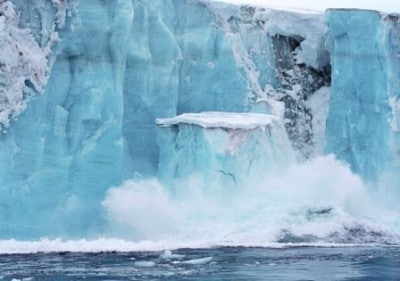 At the core of ACME's work is building models rather than data processing. The goal is to provide "a source of reliable climate change prediction information which can help to inform decision-making," Thornton said. Models include a focus on the water cycle, including how precipitation patterns change, and how this will evolve during the next 40 years in a warming climate. Others will address the stability of the Antarctic ice sheet, and its contribution to the rise of sea levels. And they'll assess how carbon, nitrogen and phosphorous cycles help regulate climate system feedbacks. "As we move toward predictive aspects of human systems, the modeling and model outputs will become more directly relevant to policy makers," Thornton said. With newly refined climate models, scientists can provide the insight needed to plan for severe weather systems that bring drought, hurricanes, freezing and flooding. The post Why Every Day's Earth Day When GPUs Drive Climate Modeling appeared first on The Official NVIDIA Blog.   |


| You are subscribed to email updates from The Official NVIDIA Blog To stop receiving these emails, you may unsubscribe now. | Email delivery powered by Google |
| Google Inc., 1600 Amphitheatre Parkway, Mountain View, CA 94043, United States | |